Top-grain buffalo hide. Here's why that matters.
"Leather" on a furniture label can mean several different materials at several different prices. We use one grade, from one species, on every sofa — and it's worth two minutes to understand why before you buy a Chesterfield from anyone.
The hierarchy of leather
Full-grain is the hide in its most untouched state — nothing sanded away, every natural mark left exactly where it grew. It's genuine and durable, but the trade-off is that every scar, bite mark and blemish on the animal stays fully visible.
Top-grain — what we use — is the layer just beneath the surface: lightly sanded to even out imperfections before finishing, which gives a more consistent hide while keeping the natural grain fully intact. It's the sweet spot between full-grain's rawness and the flat, plastic feel of corrected or bonded leather — real character, without every mark from the animal's life left on show. We use top-grain buffalo hide specifically: a thicker, more pronounced natural grain than cattle leather, which is exactly what gives it that heavier texture and lets it take a patina so well over the years.
Corrected-grain, split and bonded leather are a different tier again — heavily processed lower layers or shredded offcuts glued to a backing, with an artificial grain embossed on top. Much of the "genuine leather" furniture on the market is made from these. It cracks and peels within years.
Ask any sofa maker two questions: which grade, and which species? The answer tells you what the sofa is.
Aniline-dyed for a natural finish
Our hides are aniline-dyed, meaning the colour is absorbed through the hide rather than painted over it. You can see the natural grain through the colour, and every sofa is subtly unique. Healed scars, growth marks and shade variation across a hide are not defects: they're the proof it's the real thing.
The five leathers
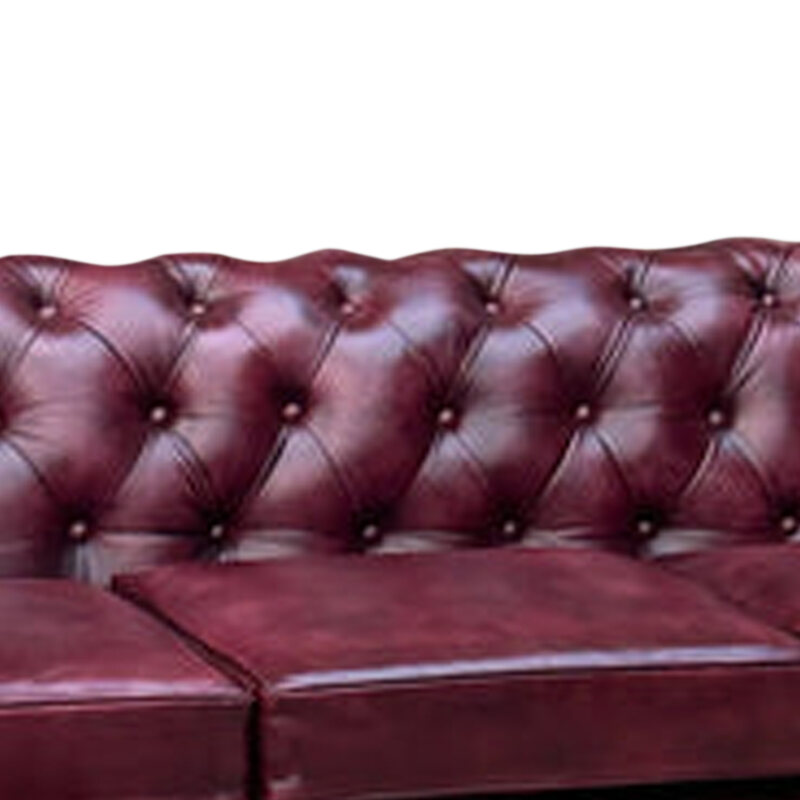
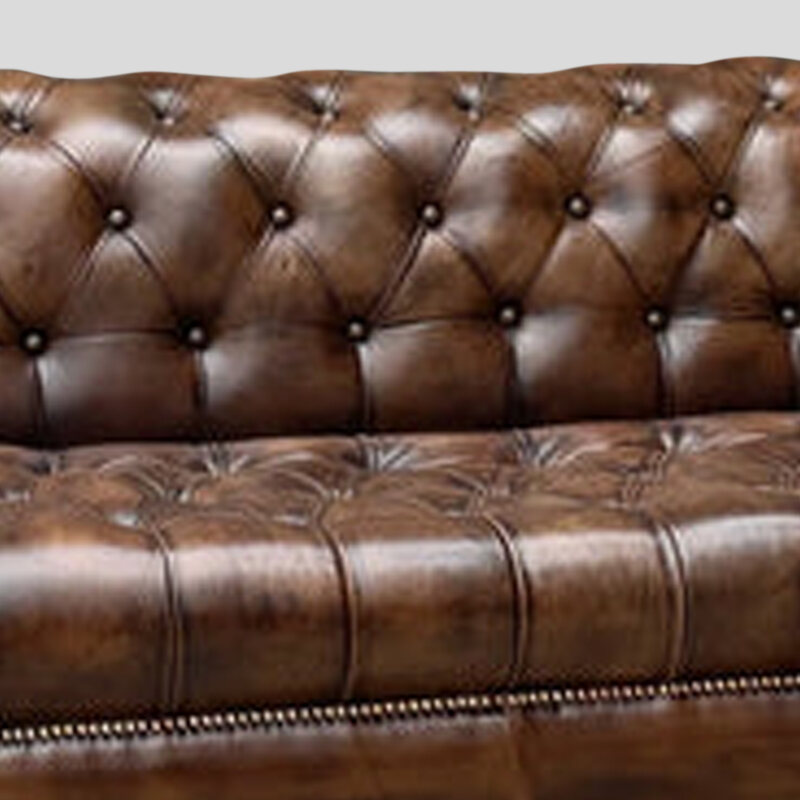
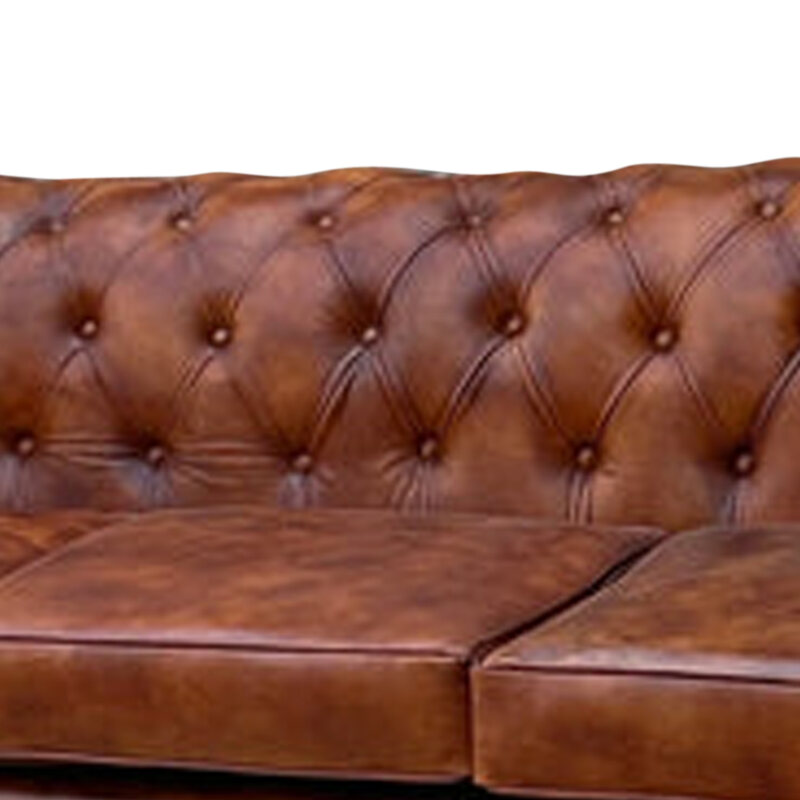
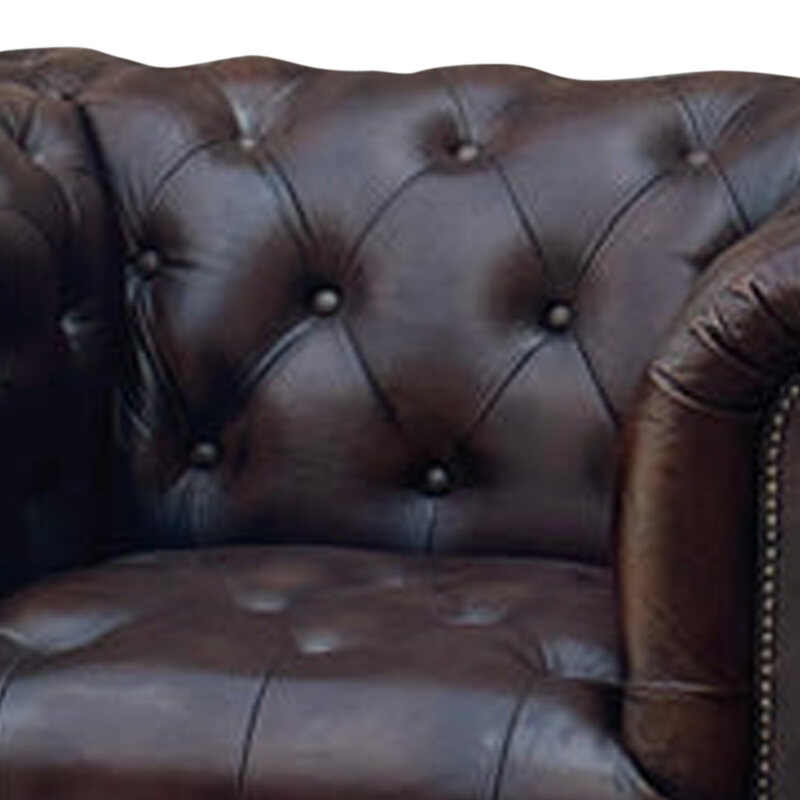
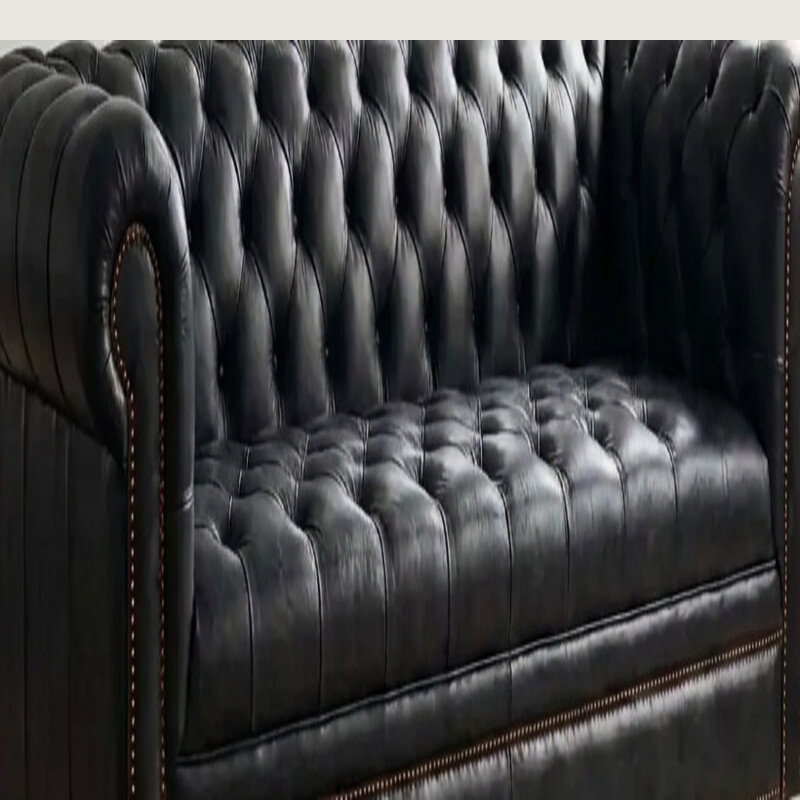
Every product photo shows the leather true to colour. New here? Get 10% off your first order while you decide.
Caring for top-grain buffalo leather
When it arrives. Your sofa ships deliberately dry. Conditioning a hide before the sea journey does more harm than good, so we leave that first coat to you. Let it breathe for 24–48 hours after unpacking, then work in a quality leather conditioner — it will drink the first application straight in, and the colour deepens as it does.
After that, very little. Keep it out of prolonged direct sunlight and a metre from radiators; dust with a dry cloth; wipe spills promptly with a barely-damp cloth and let it dry naturally. A leather cream once or twice a year keeps the fibres supple.
Marks are rather the point. Scratches and small marks generally blend into the patina over time — that is the material doing what it is supposed to do, not failing. It is the whole difference between a hide that ages and a coating that wears off.